



Real Patient Cases
Case 1: A Dominant Fibroid and Adenomyosis
Background
A 38-year-old woman with “crime scene-like” periods with large blood clots and bleeding through clothes and linens, significant pelvic pain with her menstrual (10 out of a possible 10).
Diagnosis
A dominant uterine fibroid and thick diffuse adenomyosis.
Treatment
A patient was told her only treatment option was hysterectomy. She came for a second opinion with Dr. Lipman and was qualified for UAE.
Outcome
At 3 months post UAE, all of patient’s symptoms were completely gone. Her periods are light and normal and her pain has resolved.


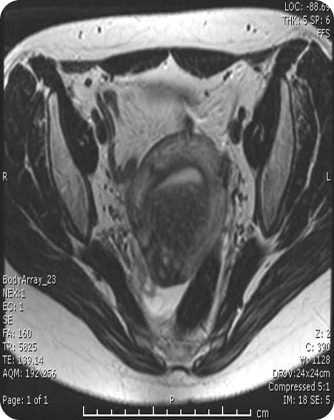
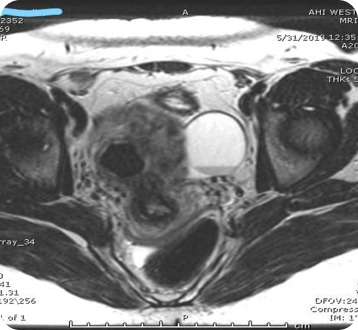
Two transverse views showing the fibroid (black circle) on the left hand image and the thick adenomyosis (dark area around the uterine cavity [white line])
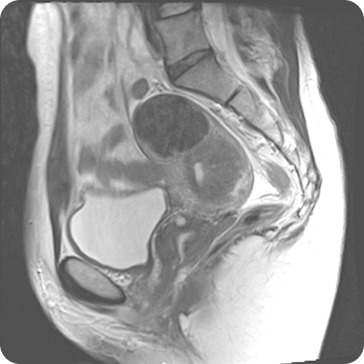
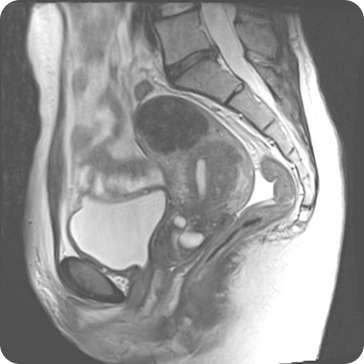
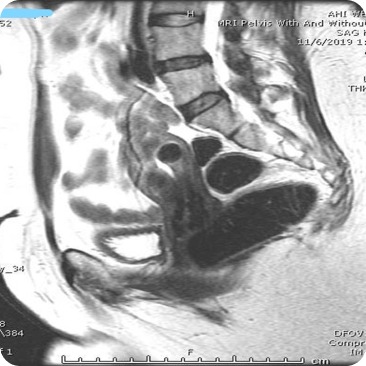
Two side view images showing a dominant fibroid (black circle) and thick adenomyosis (right behind the uterine cavity [white line])
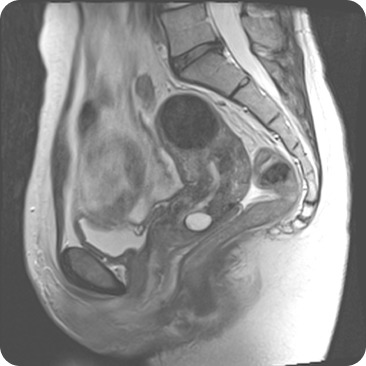
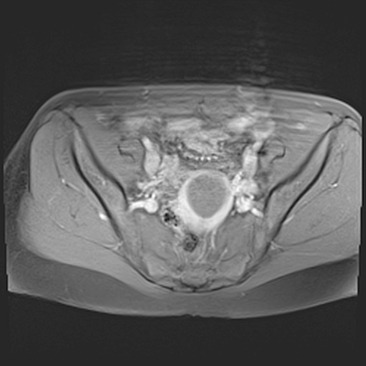
3 months post Uterine Artery Embolization (UAE). Left hand image shows a smaller uterus with almost complete resolution of the adenomyosis (area next to uterine cavity) on the left hand image. The right hand image is transverse view after intravenous contrast shows enhancement of the uterus (i.e. normal blood flow) and no enhancement of the fibroid (i.e. fibroid is completely dead and smaller).

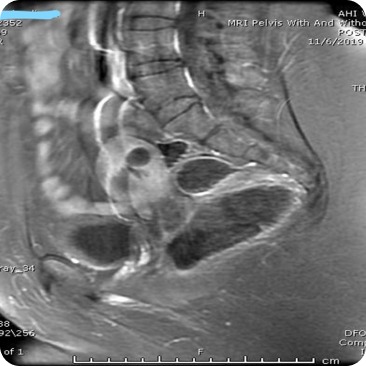
Side view pre (left hand image) and 3 months post UAE (right hand image): Notice how uterus and fibroid (black circle) are smaller and the thick adenomyosis [dark area next to uterine cavity (white line)] has almost completely disappeared.

Transverse views. Pre UAE (lefthand image) and 3 months post UAE after IV contrast (righthand image). Notice on the right hand image that the uterus is alive and enhances normally with contrast while the fibroid does not (i.e. it’s completely dead). The fibroid has also shrunk by over 50% by 3 months post UAE.
Case 2: Adenomyosis Misdiagnosed as Fibroids
Background
A 30-year-old African-American woman, interested in fertility, presented with menorrhagia (heavy menstrual bleeding) and dysmenorrhea (painful periods).
Diagnosis
An initial ultrasound suggested a solitary fibroid in the posterior corpus of the uterus. However, that was actually adenomyosis, which was later confirmed with greater detail on an MRI scan.
Treatment
The patient was only offered a myomectomy as a treatment option. She underwent abdominal surgery, but upon opening her up, no fibroid was found, leading to an immediate closure without intervention. She was then qualified for UAE.
Outcome
With proper imaging and targeted treatment, unnecessary surgery could have been avoided, and the patient’s fertility concerns were better addressed.
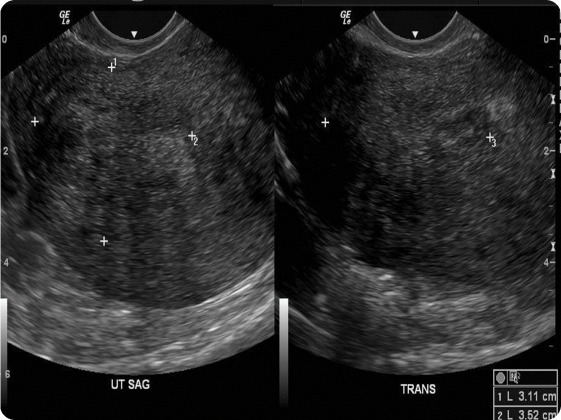
The pelvic ultrasound reported a solitary fibroid in the posterior corpus. They placed calipers around where they thought the fibroid was.
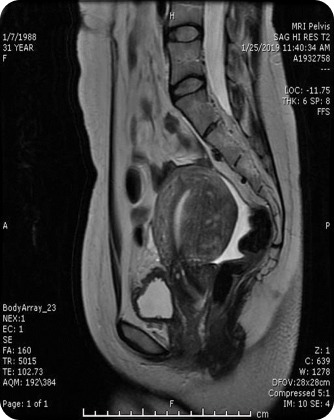
What they were measuring was actually the area of adenomyosis which is seen to much greater detail on the MRI exam. If this patient would’ve had a MRI before surgery, the surgery could’ve been prevented.
Case 3: Diffuse Adenomyosis and Multiple Fibroids
Background
A 49-year-old woman with enlarged uterus, heavy uterine bleeding with frequent accidents, severe pelvic pain, low hemoglobin (7.3 g/dL), increased urinary frequency, and painful intercourse. She had previously received multiple intravenous iron infusions due to chronic blood loss.
Diagnosis
Diffuse adenomyosis, multiple fibroids, and a hemorrhagic cyst.
Treatment
Uterine artery embolization (UAE) to target both adenomyosis and fibroids.
Outcome
The uterus has significantly reduced in size and returned to its normal position. The fibroids have shrunk, and the adenomyosis has resolved.
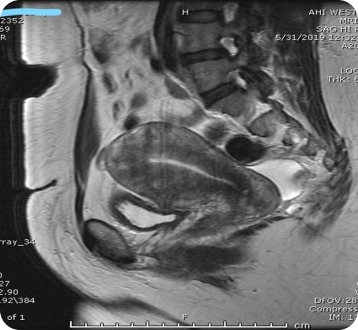
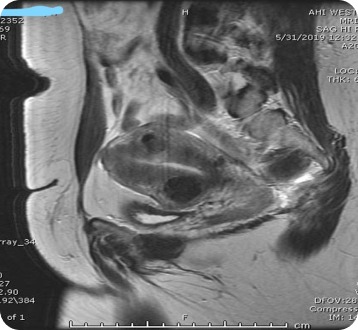
Two side view images. Left hand image showing uterine cavity (white line) with thick dark area around it and causing uterine enlargement. Right hand image shows 2 of her fibroids (black circles).
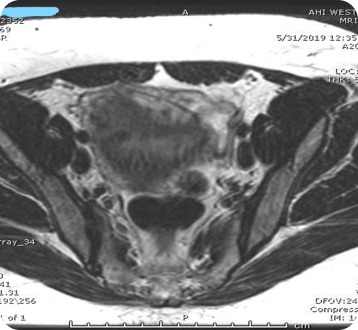
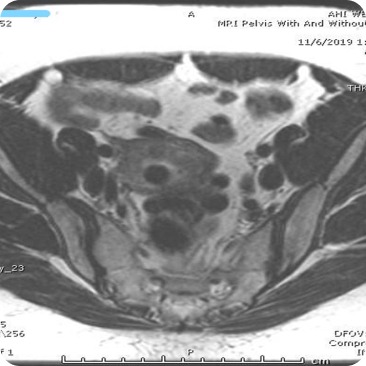
Transverse images. Left hand image shows thickened dark area around uterine cavity c/w adenomyosis. Right hand image lower in the pelvis shows a fibroid and a hemorrhagic cyst in the left ovary (white circle with a tiny fluid level at the bottom representing blood).
Sag T2 & Post-contrast Sag T1. Notice the significant reduction in the size and tilt of the uterus which is now completely normal. Notice too that the uterus enhances (turns white) with contrast but the fibroids do not (and they are significantly smaller).
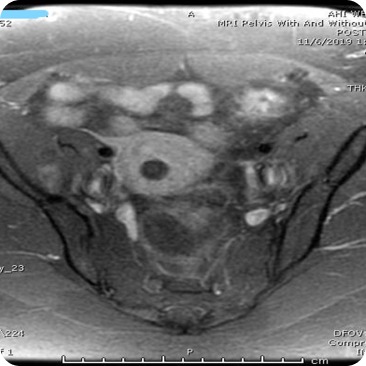
4 months post UFE transverse images: the uterus has returned to a normal size as the adenomyosis has resolved and fibroids are dead (and smaller).
Case 4: Combined Treatment for Fibroids
Background
31-year-old woman with a history of fibroids and myomectomy, presenting with heavy uterine bleeding. She wanted to avoid further surgery.
Diagnosis
Multiple fibroids, with one fibroid within the uterine cavity.
Treatment
A combined approach was planned: UFE to shrink all fibroids, followed by a vaginal removal of the intracavitary fibroid in 2-3 weeks.
Outcome
3 months post-UFE, the uterus and fibroids have shrunk. The fibroids are non-viable. The intracavitary fibroid was easily removed.
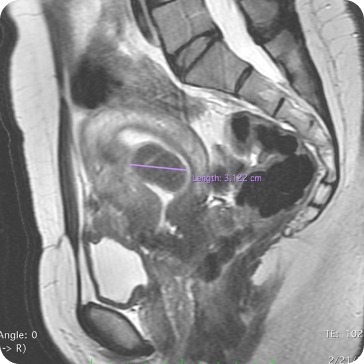
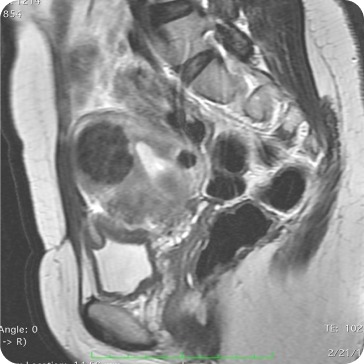
Two side view MRI images show a fibroid within the uterine cavity (measured by the purple line) along with some of her other fibroids on the righthand image. Notice too the thin dark line in the skin on the left hand side of each image which represents her previous myomectomy scar.
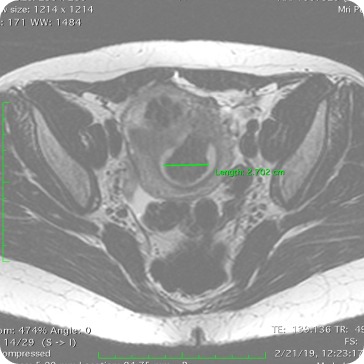
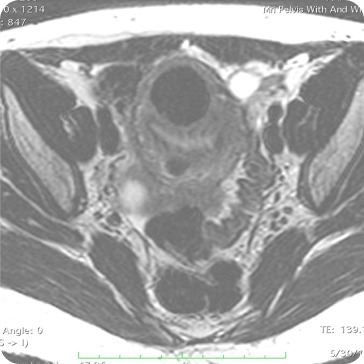
The patient did not want to undergo any more surgery. Because of her fibroid in the cavity, a combined approach utilizing UFE to knock out all of the fibroids followed in 2-3 weeks with hysteroscopic removal of the one intracavitary fibroid.
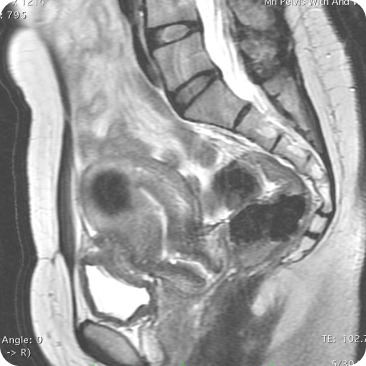
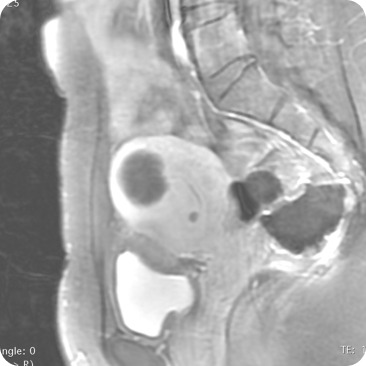
Sideview pictures 3 months post UFE: Notice the decrease in size of the uterus and fibroids which are shown to be completely dead on the righthand image. The uterus enhances normally with contrast but the fibroids do not. Because all of the fibroids were dead (including the intracavitary one), the intracavitary fibroid was very easily removed.
Case 5: Two Dominant Fibroids
Background
A 38-year-old woman with “crime scene-like” periods with large blood clots and bleeding through clothes and linens, significant pelvic pain with her menstrual (10 out of a possible 10).
Diagnosis
Two dominant fibroids, one larger than the other.
Treatment
Uterine fibroid embolization at the Atlanta Fibroid Center.
Outcome
7 weeks post-UFE, the patient reported passing a fibroid. Follow-up MRI confirmed the larger fibroid had passed, and the remaining fibroid was dead. The uterus is healthy.
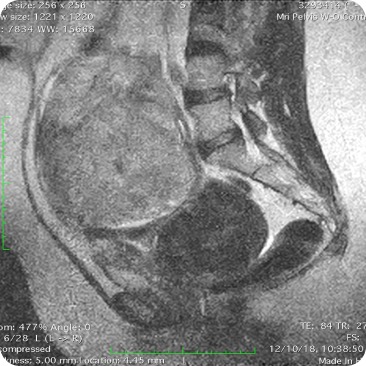
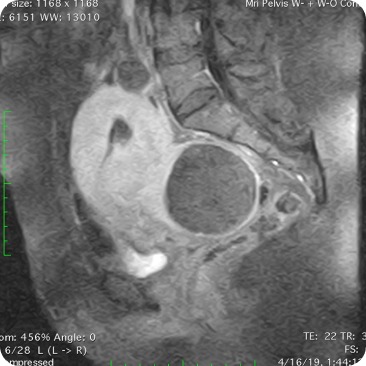
Left hand image shows side view picture pre-UFE. Two dominant fibroids are seen with larger one on top (gray circle and black circle). Patient called 7 weeks after UFE stating she thought she’d passed a fibroid. MRI obtained (righthand image) and side view now showed that indeed she had passed the larger of the 2 dominant fibroids and the remaining fibroid was completely dead.
Case 6: Adenomyosis Great Case
Background
A 50-year-old perimenopausal woman with significant irregular, heavy and prolonged uterine bleeding, pelvic pain, large palm-sized clots. She was very fatigued from her resultant blood loss and significant anemia. She was also in a lot of pain with each cycle.
Diagnosis
Pelvic MRI revealed an enlarged uterus with adenomyosis, misinterpreted as a large fibroid on ultrasound.
Treatment
She was misdiagnosed with a fibroid and advised by her OB/GYN to undergo a hysterectomy. She sought an alternative and consulted Dr. Lipman. The patient underwent UAE to treat her adenomyosis.
Outcome
3 months post-UAE, the MRI showed a significantly reduced uterus and resolved adenomyosis. Two and a half years later, a follow-up MRI showed a normal-sized uterus with a small, non-problematic residual area. The patient remains symptom-free and avoided a hysterectomy.
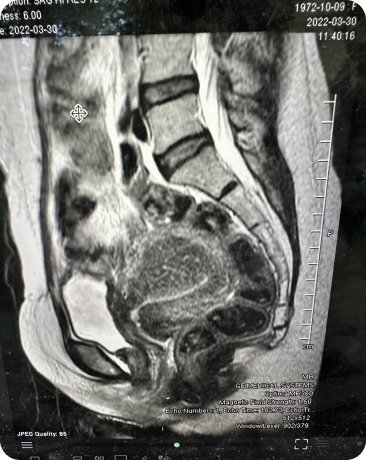
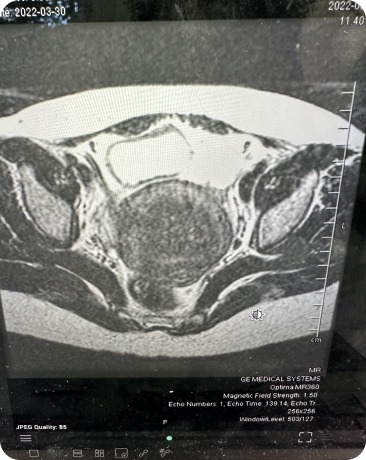
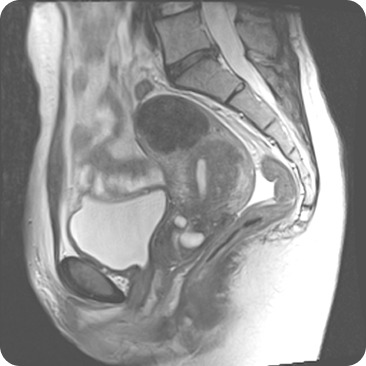
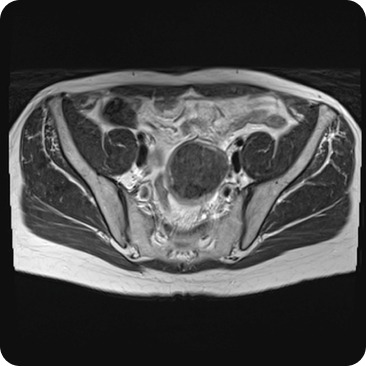
Sagittal (side view) and axial (cross-sectional view) of the uterus. The uterus is enlarged and there is a large dark area surrounding the uterine cavity (thin white line) which contains multiple white dots within it which is characteristic of adenomyosis. The somewhat focal nature of this area was misinterpreted on the ultrasound in the Gynecologist’s office and labeled a large fibroid.
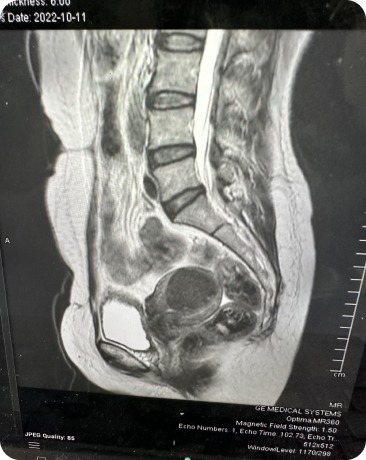
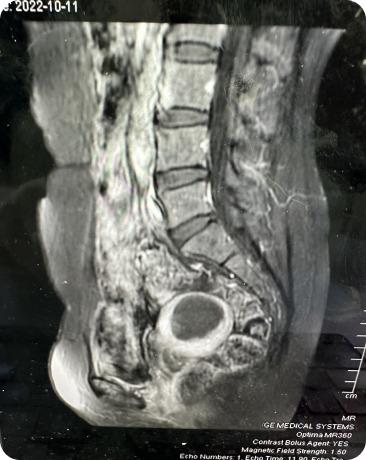
3 month follow up images both in the sagittal (side) view; without iv contrast on the left and after iv contrast on the right)
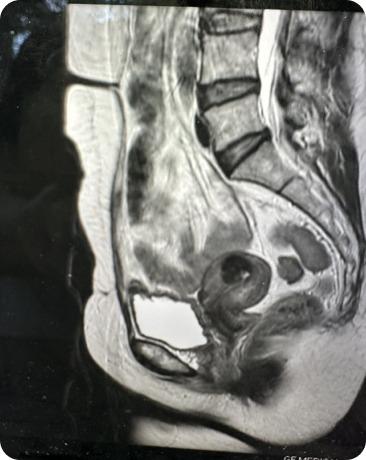
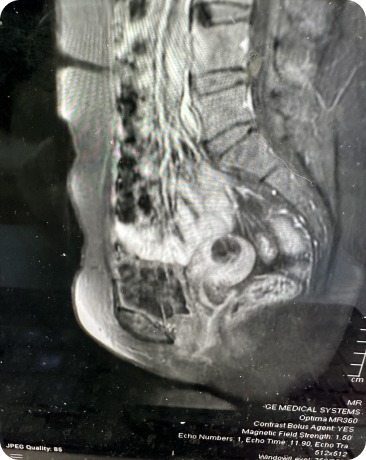
2 ½ years post embolization both from the sagittal (side view) showing a return to a normal size uterus with a tiny residual area where the adenomyosis used to be. It continues to shrink and may ultimately disappear entirely, but all that matters is that it is completely dead, and it will never bother her again. Also, she won’t develop any new areas of adenomyosis (or fibroids for that matter).
Case 7: Multiple Fibroids
Background
A 39-year-old woman with very heavy periods, monthly pelvic pain, and increased urinary frequency. An OB/GYN only offered surgery, warning that her 11-cm fibroid made hysterectomy more likely. OB/GYN dismissed UFE, claiming the fibroid was too large. She visited Dr. Lipman for a second opinion.
Diagnosis
An MRI confirmed multiple fibroids, including the large 11-cm one.
Treatment
She underwent uterine fibroid embolization at the Atlanta Fibroid Center.
Outcome
At her 4-month follow-up, she was symptom-free: lighter periods, no pain, better sleep, more energy. She felt “like a teenager again”. A post-UFE MRI showed many fibroids disappeared, including the 11-cm one.
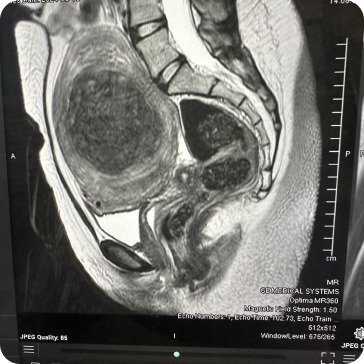
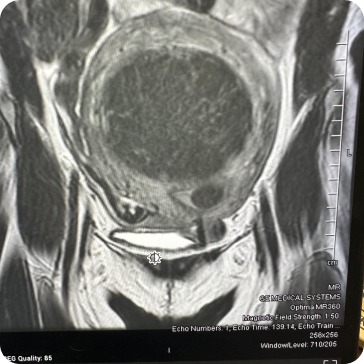
Pre-UFE pelvic MRI exam: the side view on the left-hand image and frontal view on the right hand-image.
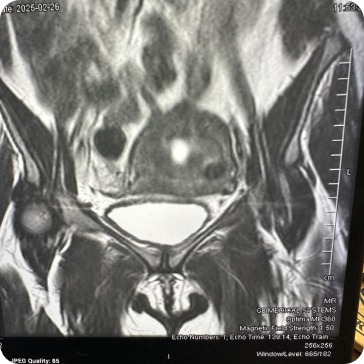
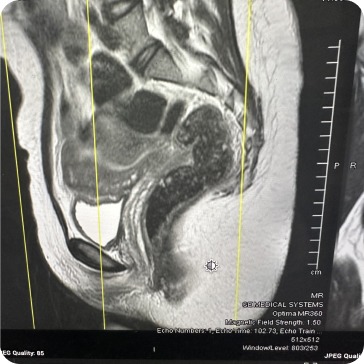
Post-UFE imaging looks great. Many of her fibroids disappeared including the 11-cm one, and all of the few remaining fibroids were completely dead on the post-contrast images (not shown).

